

Make the Most of Tokyo in January! Hatsumode, New Year Events, and Starting a Special Year with Street Kart
The moment the light turns green, the kart launches forward, slicing through the crisp winter air. Tokyo in January—the cityscape under clear skies looks completely different from any other season. Shopping streets adorned with New Year decorations, crowds heading to their first shrine visit, and Tokyo Tower gleaming against a brilliant winter sky. January might actually be the most dramatic time to experience Tokyo all year.
When a friend from overseas says “I want to visit Tokyo in January,” honestly, it gets me pumped. That’s because Japanese New Year has a vibe unlike any other country’s celebration. While American New Year’s wraps up with parties and countdowns, Japanese New Year is this fascinating space where quiet prayer and vibrant tradition coexist. The solemnity of hatsumode, the thrill of drawing your fortune slip, the warmth of sweet sake from a street stall—all of it is a one-of-a-kind experience you can only have in Tokyo during January.
The Magic of Tokyo’s New Year Shrine Visits
The absolute must-do in January Tokyo is hatsumode. “Hatsumode” is the Japanese tradition of visiting a shrine or temple at the start of the new year, and millions of people flock to Tokyo’s sacred sites every year. Get this—Meiji Shrine alone draws around 3 million visitors during the first three days of January. The sheer scale is mind-blowing.
Meiji Shrine, just steps from Harajuku Station, is a mystical space surrounded by a massive forest right in the heart of the city. As you walk along the approach, the noise of the city fades away like magic, and all you hear is the crunch of gravel under your feet. Each time you pass through a towering torii gate, you can literally feel the atmosphere shift. You toss in your offering, then bow twice, clap twice, and bow once more. It feels a bit nerve-wracking at first, but just watch the people around you and you’ll pick it up naturally.
Sensoji Temple in Asakusa takes on a truly special atmosphere in January. The massive red lantern at Kaminarimon Gate gets extra New Year decorations, and the scent of sweet amazake and grilled rice crackers drifts through Nakamise-dori. Sipping warm amazake in the chilly winter air is basically the Japanese version of hot chocolate. Drawing an omikuji (fortune slip) is another highlight of hatsumode—some even come with English translations, so visitors from abroad can join in the fun. And hey, if you pull “bad luck,” don’t sweat it. Just tie it at the designated spot in the temple grounds, and you leave the bad fortune behind. Pretty clever system, right?
Kanda Myojin Shrine sits right next to the tech hub of Akihabara and is famous as the deity of business prosperity. Watching waves of IT company employees line up for their first work-year visit is such a quintessentially Tokyo scene—tradition and technology side by side. The shrine also has deep ties to anime culture, making it easy to combine with an Akihabara sightseeing run.
January-Only New Year Events and Winter Tokyo Explorations
Beyond hatsumode, January Tokyo is packed with seasonal events you won’t find any other time of year. Once the first three days pass, the city gradually returns to its routine, but that New Year afterglow lingers throughout the month.
On January 2nd, the Imperial Palace holds a public New Year greeting where the Emperor addresses the nation. It’s a rare chance to step inside the Imperial Palace grounds, which are normally off-limits, drawing visitors from all over the world. The easy walking-distance access from Tokyo Station is a bonus. Watching crowds gather in front of the palace while the Marunouchi business district sits in peaceful New Year silence—it’s a whole different side of Tokyo.
Around Tsukiji Outer Market and Toyosu, the first tuna auction of the year makes headlines every January. The news gets broadcast worldwide—it’s that famous. While getting into the auction itself is tough, you can absolutely feast on fresh seafood at the outer market. Eating piping-hot tamagoyaki or a seafood bowl in the frigid morning air, breath visible in white puffs—that’s a January Tokyo food experience you don’t want to miss.
In Odaiba and Roppongi Hills, winter illuminations are still going strong during this period. Many spots keep their lights on through early January, and the crisp winter air makes everything look even more vivid. Tokyo’s nightscape is stunning year-round, but seeing that sea of lights through winter’s crystal-clear atmosphere is on another level. Rainbow Bridge as a backdrop with illuminations reflecting off the water—it’s the kind of shot that blows up on social media.
At Zojoji Temple, you can sometimes catch a special collaboration with Tokyo Tower’s nighttime illumination in January. The lit-up Tokyo Tower rising behind the historic temple is basically the defining image of Tokyo—where tradition meets modernity. If you’re into photography, this combo is not to be missed.
Why Street Kart Is the Go-To — A One-of-a-Kind Winter Tokyo Experience
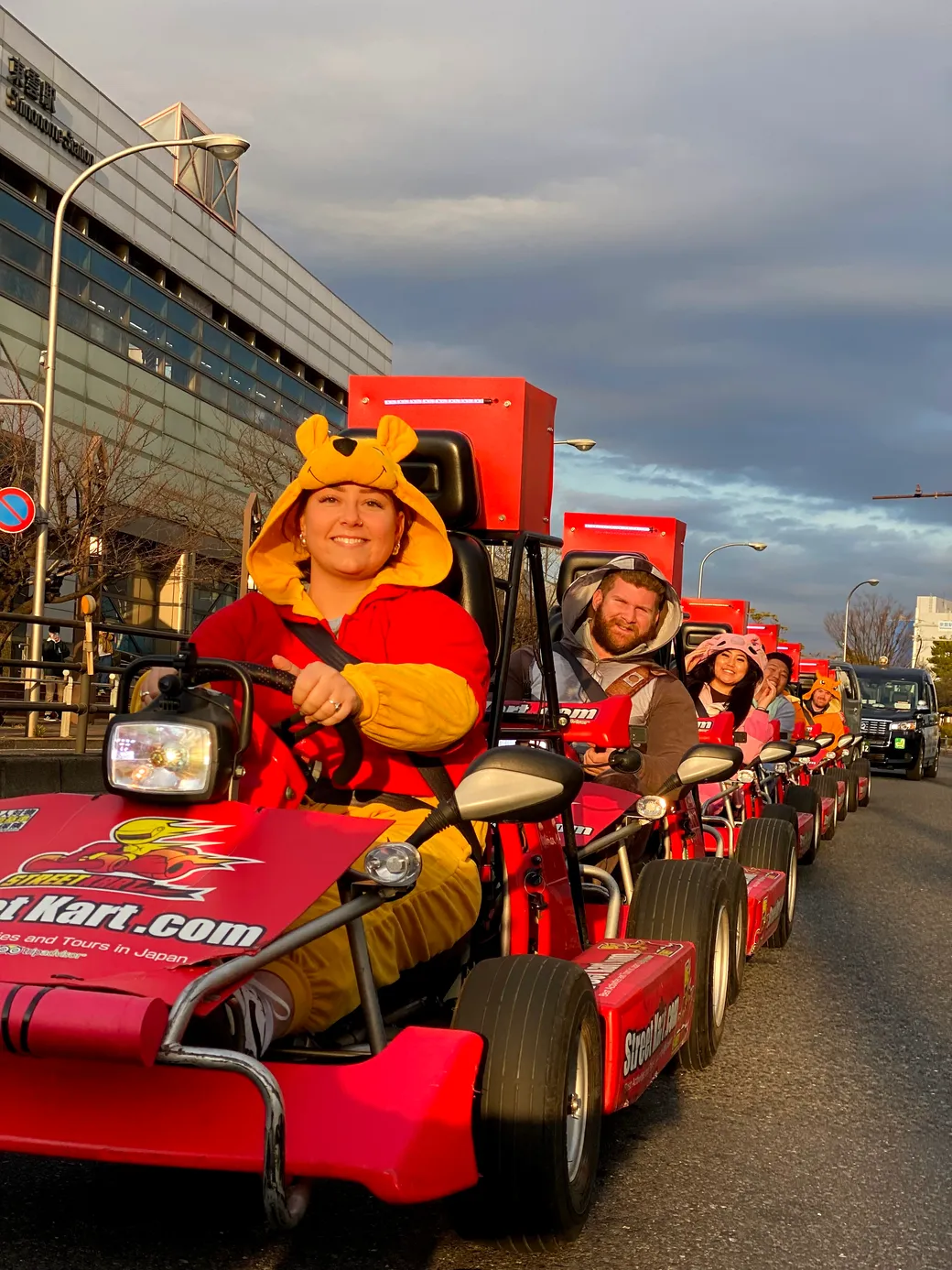
Here’s something I want to put on your radar: street kart tours through the streets of Tokyo. I’ll be honest—when I first heard about it, my reaction was “Wait, you can actually drive karts on public roads?” But it’s a legit, well-organized tour operation with trained guides leading the way, so you’re in good hands.
Street Kart is known as the first kart tour operator in the industry to deploy guides specifically trained for international drivers. With over 150,000 tours completed and more than 1.34 million total customers, the track record speaks for itself. An average customer rating of 4.9/5.0★ with over 20,000 reviews—numbers like that don’t happen by accident.
First up, the guide quality. Street Kart’s guides go through specialized training for working with international visitors, so English communication is smooth and natural. For travelers worried about the language barrier—a concern I hear all the time—this is a huge relief. With Street Kart, that worry is off the table.
Then there’s the route design that brings you right up close to Tokyo’s iconic landmarks. Tours follow set courses, but those courses are seriously well-crafted. Seeing spots like Tokyo Tower and the Shibuya area from ground level—practically skimming the pavement—is something you simply cannot get from a tour bus or train window. In January’s crystal-clear winter air, with those blue skies as your backdrop, Tokyo’s landmarks rushing toward you is so intense you can’t help but let out a shout.
Vehicle safety and maintenance are another key point. They maintain a fleet of over 250 street-legal karts, each one properly serviced. The entire experience is offered in English, from booking to the day-of briefing. Their website supports 22 languages, so you can check everything in your own language right from the reservation stage.
Having 6 locations across Tokyo is another major advantage of Street Kart. You can pick whichever shop is most convenient based on where you’re staying or what you’ve got planned for the day. Since January days are short in Tokyo, you’ve got options—catch the soft morning light on an AM tour, or time it for the evening when illuminations start flickering on. That scheduling flexibility is a real plus.
And here’s one more thing that makes January special. Winter air in Tokyo is incredibly clear, giving you visibility for miles on many days. From the kart’s low seat, the Tokyo sky opens up wide above you, and on a good day, you might even spot Mt. Fuji peeking between the buildings. Feeling the winter wind on your fingertips as you grip the steering wheel, racing through streets still buzzing with New Year energy—that kind of rush is something only the people who’ve done it truly understand.
Crafting Your Perfect January Tokyo Plan: Hatsumode × Street Kart
If you’re combining hatsumode and street karting on a January Tokyo trip, here’s a plan worth considering. Spend the morning at Meiji Shrine or Sensoji Temple for your New Year prayers, then warm up afterwards with amazake and freshly grilled rice crackers along Nakamise-dori. Once you’re nice and toasty, hit up a Street Kart tour in the afternoon and take in the city from that incredible low-rider perspective.
Before or after the tour, ducking into a nearby café for a breather is also a great call. Tokyo is loaded with amazing third-wave coffee spots, perfect for warming up after the cold. Sipping coffee while scrolling through the photos and videos you just captured—that’s a luxurious little moment to process all those travel memories.
January temperatures in Tokyo can drop to around 5°C (41°F), so bundle up properly. Since you’ll be catching the wind head-on in a kart, a warm jacket, gloves, and a scarf are absolute essentials. On the flip side, winter’s dry weather means plenty of sunny days and very little rain—that’s a January perk. Karting under blue skies makes for incredible photos too.
As for driving requirements, you’ll need documents like an international driving permit. Check the official license information page ahead of time for peace of mind. Reservations are easy through kart.st, so once your travel dates are set, get on it early. For more detailed tour info and course details, head to https://kart.st/.
See New Year’s Tokyo from a Whole New Angle
January Tokyo is loaded with experiences you won’t find any other time of year—the sacred atmosphere of hatsumode, the buzz of New Year events, gorgeous winter skies, and the extraordinary thrill of tearing through the city in a street kart. Not through a tour bus window, but from ground level, feeling the New Year spirit of Tokyo with every sense. That’s the kind of memory ordinary sightseeing just can’t deliver.
If you’re planning a January trip to Tokyo, why not say your New Year prayers for good fortune, then grab a kart steering wheel and hit the streets? Carving through Tokyo’s crisp winter air—that feeling is sure to be a brilliant way to kick off your new year.
Regarding Costumes:
We do not offer costumes related to Nintendo or “Mario Kart” for rental. We only provide costumes that respect intellectual property rights.
